
Copyeditors Explain Things to Me
Or: Much Ado About Commas

We’re still on for the March 29th meeting of the Irregular Book Club to discuss A Dialogue on Love by Eve Kosefsky Sedgewick. If you want to be a part of that and/or future Irregular Book Clubs or if you just want to support this ongoing email concern as well as my writing more broadly, consider upgrading your subscription.
I love copy editors so much.
I’ve never been one of those writers who think the copy editors are all drunk on power and are always trying to mess with their prose. (Literally I’ve heard novelists say this.) I don’t always agree or accept every edit, but I love every suggestion; I love seeing a document through someone else’s eyes that closely. I leave a lot of colon-parenthesis smiley faces in the comments.
When we stopped doing paper copyedits, I first felt really sad reading all the track-changes comments, but now it sometimes feels like I’m passing notes with my friend, or chatting very slowly on AOL Instant Messenger in 1998, and even though the copy editor rarely even has a name within the document, you do start to get a sense of their personality over the course of the hundreds or thousands of edits and comments.
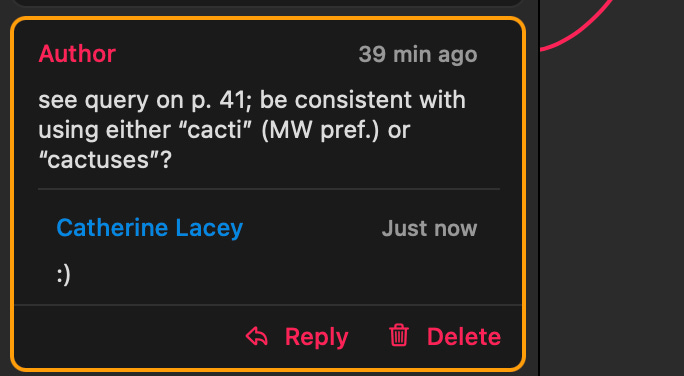
In fact, when I first got on Substack I thought— this is never going to work. I will have to hire a copy editor, and I’ll never be able to afford to both pay myself to write and pay a copy editor to find my mistakes.
Instead—my Substacks just have a lot of typos, and I just live with my shame.
Eventually it’s become clear— for me, Substack posts are not in the same category as my books or essays or stories. Mainly this is because every single book or story or essay I’ve ever written has been edited by someone else, then copy-edited and copy-edited again, then once or twice more just for good measure. Substacks (or mine, at least) are more like emails, rough around the edges.
When I got the copy edits on my first novel in 2013 they were on paper. The manuscript was mailed to my apartment and I responded to the red-inked copy edits with a blue-inked pen. This was the standard practice at FSG at the time, though I think by then a lot of other publishing houses had switched to a track-changes Word doc.1
My friend Rebecca (who was then an academic books editor and not yet the author of Murder Bimbo) lent me her copy of Copy Editing For Dummies so that I could decode the hieroglyphics.
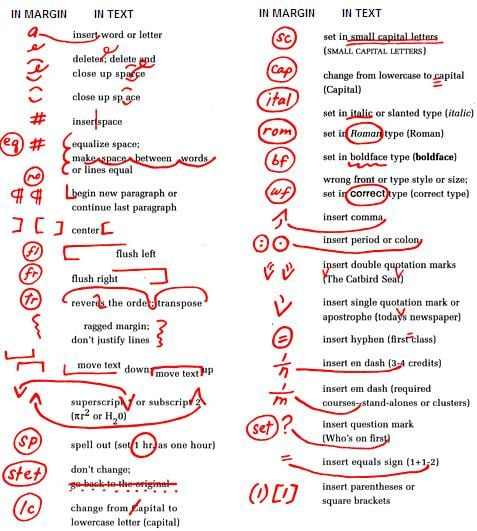
What I learned while responding to those first ever edits is that my ability to spell, punctuate, or correctly use grammar was much weaker than I knew. Sure, the prose had its own logic, its unusual yet intentional syntactical tics, but then there were just lots of things that did not make sense. There were so many basic, humiliating errors in that manuscript that when I eventually met one of the copy editors in person I nearly fell to my knees and kissed her hand. Rachel!! I am horrible with names, but I am pretty sure her name was Rachel. Thank you, Rachel.
In the many years since then, I’ve learned that not only do I still make tons and tons of really stupid grammatical errors, but also that I’m not that great and re-learning the things I apparently learned incorrectly in elementary school or never learned at all.
Maybe I have a touch of the dyslexia, I’ve sometimes thought, and maybe that’s true, but I also feel like giving myself a diagnosis is just an excuse trying to cover up the truth— that I’m impatient and flighty and that even though I love writing and reading, I read over my pages too quickly to catch the mistakes. I must have gotten it from my father, as my mom used to regularly text me when I published something literally anywhere on the internet that had a typo in it. She couldn’t help herself. Sometimes I still get such messages, and honestly, I have always appreciated them. My pro-bono, guerilla copy editor.
But the copyediting stage of a book is also full of fun moments— or it least it can be fun, if you have a really thorough editor on your side, like this note from when I was reviewing The Möbius Book:
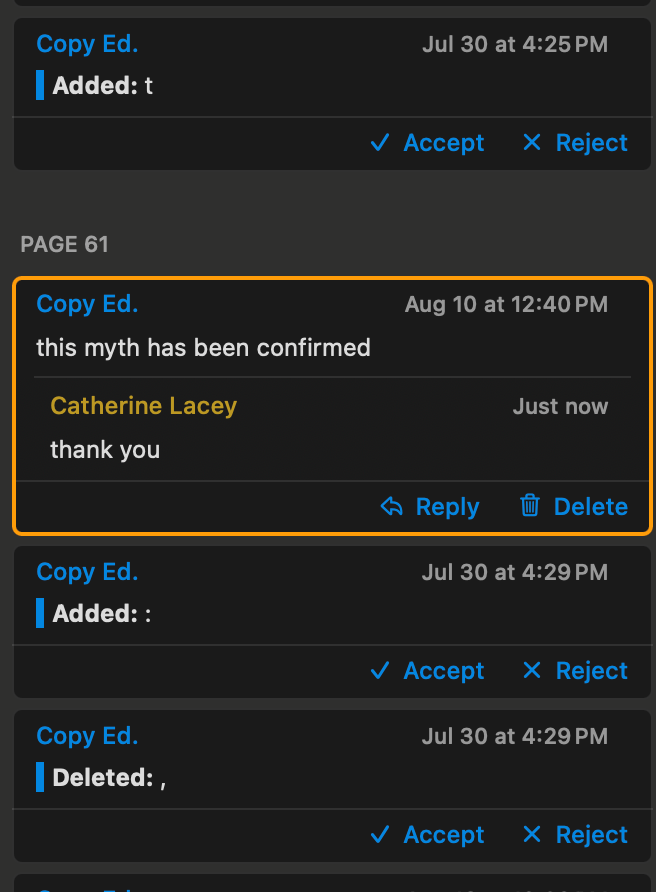
This Myth Has Been Confirmed!!!!!
I let out a little squeal of delight when I came to this moment. Oh man oh god oh lord there’s nothing this copy editor can’t do— they’re out there Confirming Myths!!!
All this actually meant was that the copy editor had taken the time to go look up a Greek myth about cicadas that I had referenced. I’ve had copy editors point out all kinds of time inconsistencies, also— this was especially the case with Biography of X— though I’m not sure if that’s really their job or not. Maybe they just can’t help themselves.
More recently, I’ve been reviewing the copy edits on my forthcoming story collection, My Stalkers (January 2027). This copy edit has been a little less involved because all of the stories (except one) have been through multiple edits and published in magazines. Instead, the comments have been veering more philosophical, or pointing out differences in FSG’s house style and the styles of other magazines. (Goodbye New Yorker umlaut.)
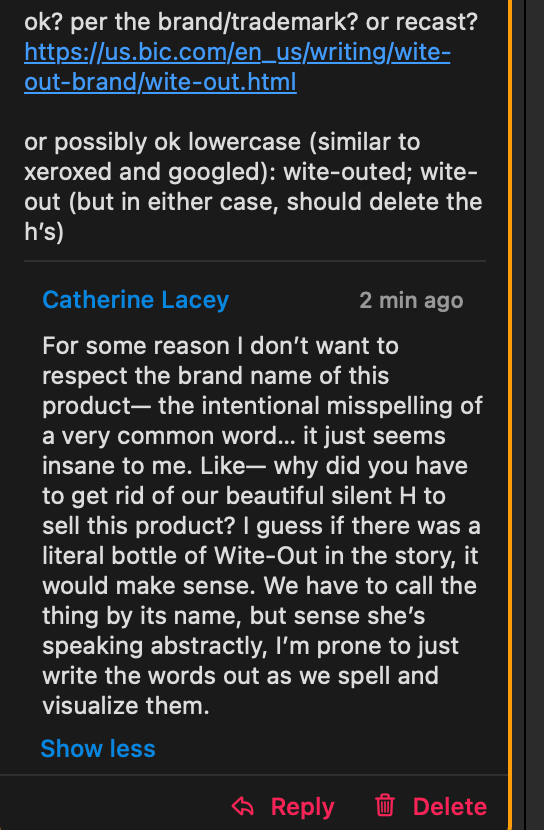
Like this— should it have been “Wite-Out” (as the brand name is formatted) or just “white out,” two words from the English language that can be used with clarity in place of the brand name?
Copy editors are always saving me from my own stupidity and for that I am so endlessly thankful. There was one time last year when a really really really stupid spelling mistake here on Substack led to acute yet almost debilitating embarrassment, and then, somehow, the most amazing outcome.