
Very Urgent Reading
Dissociation is Good, Actually!

I’ve been a little slower on Substack these past weeks because I’ve been in it deep with the novel draft— a process I intend to share more about soon on the On Writing series— and also because I’ve been editing a rather long short story that will come out with The New Yorker in April. Funny story about that process at the end of this post. Thanks for your support as always.
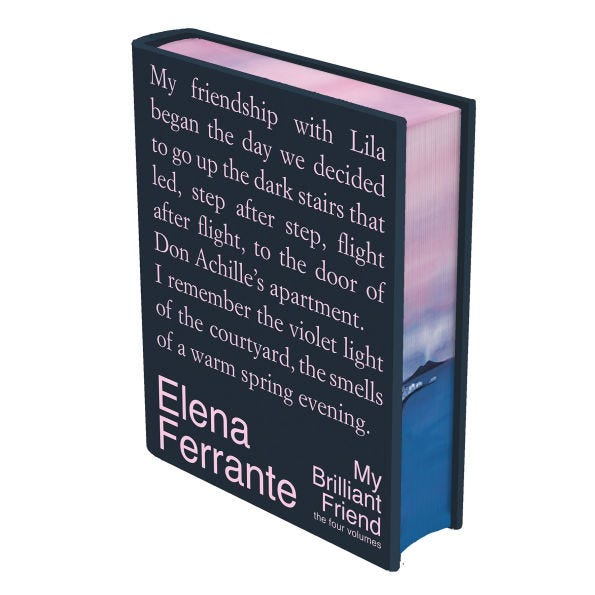
My friend Kendee had been recommending the Neapolitan Quartet to me for at least a year because she wanted to talk to me about it. I had tried to start My Brilliant Friend, the first book in the series, a few times but it had never felt quite right so I took the recommendation with a grain of salt. But then, the last time I was staying at her house, Kendee sat me down and was like, “Listen, I love you, but if you don’t read the Neapolitan Quartet very soon there will be PROBLEMS.”
Point taken! I started reading it a couple weeks later. There’s nothing like a well-timed and friendly threat to really get me into a 1240 page four book series.
And listen— Kendee was totally right. When I finished reading the first one, I immediately went out and bought the second. When I finished the second at the beach, I started reading the excerpt of the third immediately on my laptop. I’m now done with the third—I had to take a break to catch up on the Proust reading club I’m in—but I will read the fourth the minute I get it in a few weeks.
Just yesterday I realized I’d fallen out of touch with a couple of older friends that I admire and think of as extended family. I’d gotten their Christmas card, delayed by a month because that’s how mail works in Mexico, and kept it on the kitchen counter for a while to remind me to write to them, but I kept forgetting. Then just yesterday I remembered and sent them an email, writing out a summary of the several difficult things that have happened in my family since November (not to mention the wars, both domestic and international, that my home country has been waging) and I was like, wow, no wonder I’ve been reading so much and forgetting to get in touch with anyone.
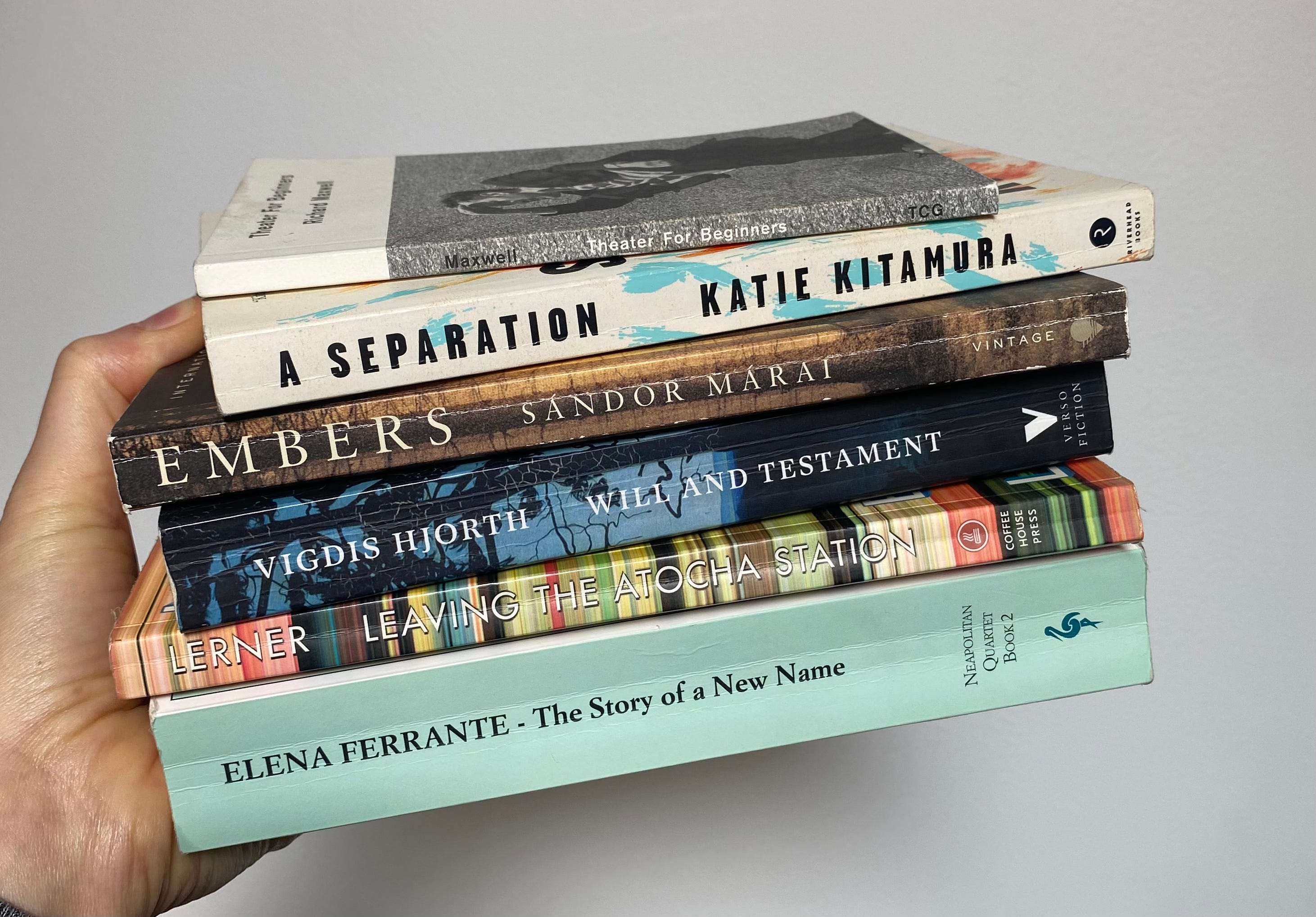
Dissociating into books has been my number one coping mechanism since the 1990. That kind of reading every spare minute you have reading because you can’t really think of anything other than the characters in the book. Of course, a work like the Neapolitan Quartet is widely known to be a page turner of the highest quality. (I was suspicious of how good it could be, given how out of control popular it has been, but it really nails the magic ratio of internality/weirdness and a gorgeously paced plot.)
But then I was looking at my bookshelf and thinking of stranger books that I personally found intoxicating in that particular way.
Below I attempt to explain what makes these books unputdownable—
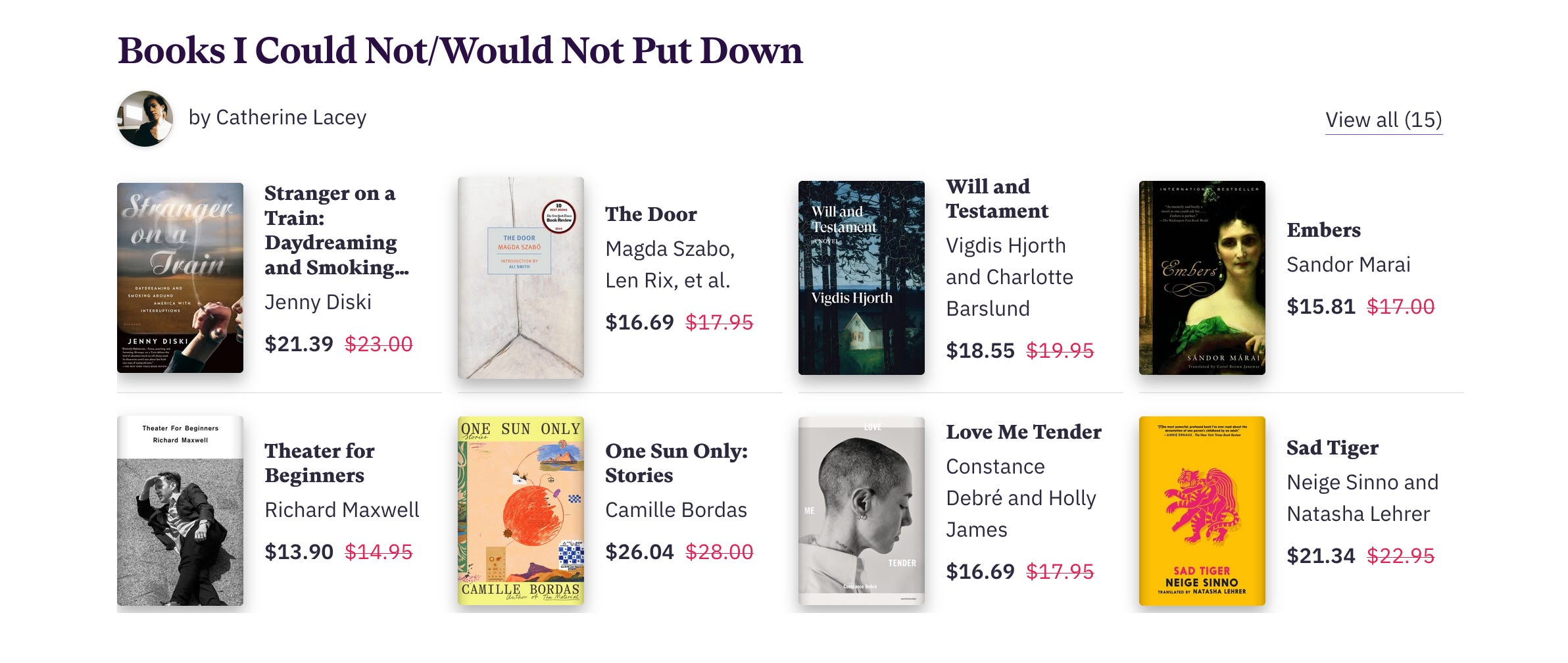
Stranger on a Train by Jenny Diski
This one is 100% mood. It's life happening in the smoking car of a train barreling through the United States, mostly the south, as seen by one of the most unsung heroes of the personal/impersonal essay that the 20th century produced.
The Door by Magda Szabo (translated by Len Rix)
One of the most thrilling books about one strange woman’s indescribable power over another. A Hungarian classic first published in 1987, and the main character’s name is Magda, same as the writer, and they share a resemblance, so don’t anyone tell me it’s trendy or contemporary for an author to make that move in 2026.
Will and Testament by Vigdis Hjorth (translated by Charlotte Barslund)
I’m going to write something about all of Vigdis Hjorth’s books very soon, but this is probably the most intense of a very intense bunch. But if you’re upset by very bleak Norwegian family dynamics, just skip all of Hjorth. If that’s your thing, read everything she’s ever written and maybe start here.
Embers by Sándor Márai (translated by Carol Brown Janeway)
Another classic of Hungarian literature, this one much more saturated with revenge and early 20th century vibes. This is on backorder at Bookshop.org but just go ask your local bookshop or library for a copy.
Theater for Beginners by Richard Maxwell
This is one of those mercurial books about creativity that I keep returning to. Ostensibly it’s about making theater, but really it’s about making anything. I think I discovered it because Miranda July recommended it somewhere years ago.
One Sun Only by Camille Bordas
After reading the first novel Camille wrote in English (she’s French, published a few books in French very young, but now lives in the States and writes in English) I’ve been reading her short stories as they’ve appeared, about one per year, in The New Yorker. They are so peculiar and take so many strange moves. This is my most anticipated collection in years.
Love Me Tender by Constance Debré (translated by Holly James)
My friend Zoe just read this book and was texting me that she found it heartless and kind of emotionally terrifying and thus found the book insufferable. I loved it for all the same reasons! She called the author “hipster gay Camus” and she’s not wrong!
Sad Tiger by Neige Sinno (translated by Natasha Lehrer)
I started a whole book club because I needed to talk about this book, and also I wanted as many people as possible to read it.
Leaving the Atocha Station by Ben Lerner
Contemporary young folks literature that has a huge debt to this book and not enough of them talk about it, I think. Do the youngsters find it cringe that it was written by a white male Millenial? I do not care. I love this book forever.
My Death by Lisa Tuttle
A precise, short, obsessive book narrated by a women trying to get to the bottom of a mystery about an artist she admires, but also feels haunted by.
The Folded Clock by Heidi Julavits
This book invented a whole new kind of memoir. Also it’s really really funny about midlife, family life, writing, everything. It’s also one of those books that, when I was reading it, I would only put down to take 100 notes because it loosened up my thoughts in that way.
Territory of Light by Yuko Tsushima (translated by Geraldine Harcourt)
Another precise, urgent, short book, this one about a woman and her child moving to an apartment, or rather looking for a new way to live. It’s a very calming, meditative read and yet also really fervent. If you’re confused about what to do with yourself, or you’re in a transitional state, I think you’ll feel the urgency here, though it’s subtle.
Loop by Brenda Lozano (translated by Annie McDermott)
Of all of Lozano’s books, this one remains my favorite, though it’s close. It’s a beautiful, coiling book about young love and young creativity and living with your influences. Marcel Proust is sort of a character. It’s really funny and fun.
A Truce That Is Not Peace by Miriam Toews
Read this one last year, two times in a row, to try to get to understand it. In some way it is an attempt for Toews, author of several incredible novels, to describe why she writes, but in order to answer that question she has to tell the story of her sister. It’s absolutely full of sentences you have to sit with, copy into your notebook, come back to. Totally essential, vulnerable, and as always with Toews, really funny.
A Separation by Katie Kitamura
I read this on a weekend trip during which I was supposed to be spending time with people I did, at the time, like being around, but in retrospect I realize I liked reading this book a lot more. A great place to start with Kitamura if you somehow haven’t already become a rabid fan.
As promised, the ridiculous story— again starring my personal hero, The Very Scrupulous Copy Editor— about working on edits for a story forthcoming in The New Yorker.